
Storm Damage Roof Repair: What to Do and Who to Call
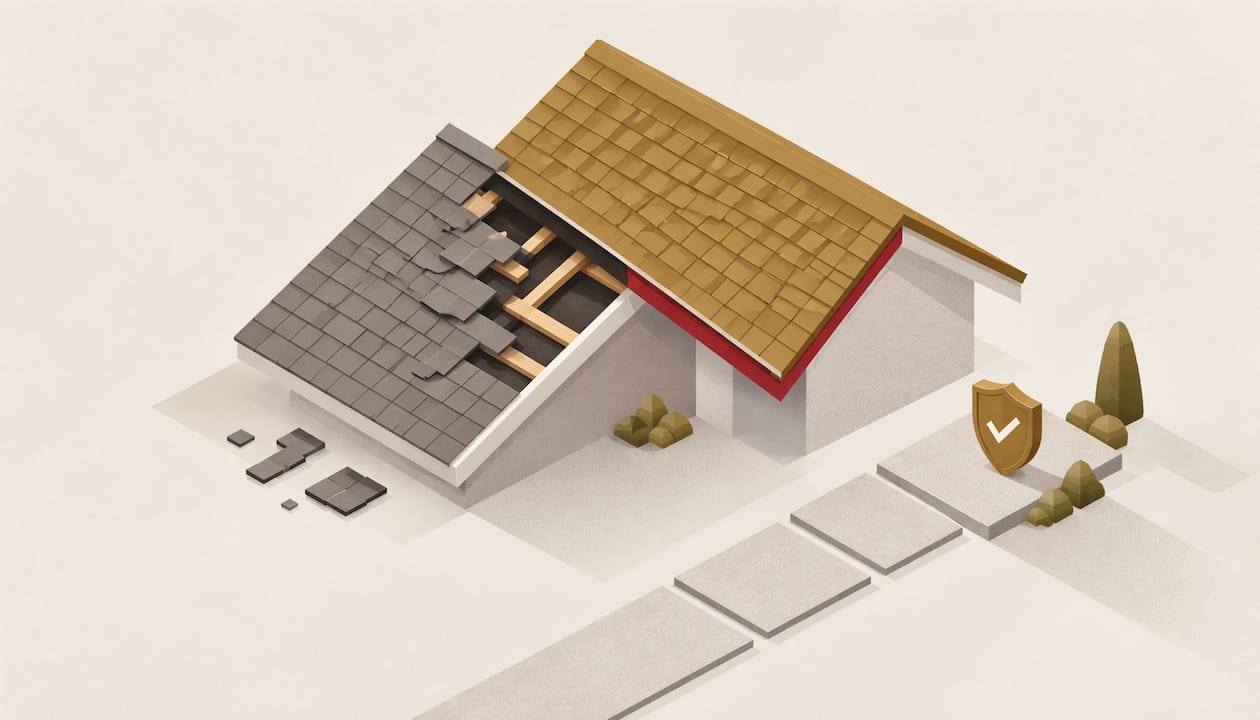
A storm-damaged roof needs four things in order: safety, evidence, temporary weatherproofing and a proper repair by a roofer you can trust. Do them in that order and you protect both your home and your insurance claim. We repair storm-damaged roofs for homeowners and commercial property managers, and our 24/7 emergency roof repair service covers Wiltshire, so the first call after you have photographed the damage can go to a roofer who also handles the lasting repair.
TL;DR
- Stay on the ground. Inspect from the garden or street, photograph everything, and do not climb up while the weather is still bad.
- Call your insurer first. Temporary repairs are normally fine, but keep every receipt and tell the insurer what was done.
- A tarpaulin or boarding is a stopgap. A few tiles can often be replaced within one to three days, while larger repairs take much longer.
- Never agree to work on the doorstep. Rogue roofers target storm-hit streets, so check a company’s name, address and insurances before you pay.
- Claims fail when damage looks like wear and tear, so a roof that has been inspected and maintained is easier to claim for.
Table of Contents
- First: make sure it is safe
- Document the damage before anything is moved
- Calling your insurer and what is covered
- Temporary protection, and repairing in the rain
- What a lasting repair involves
- How to avoid a rogue roofer after a storm
- Our approach to storm repairs
- Getting your roof repaired with Yellowstone
- FAQ
- Sources
First: make sure it is safe
Do nothing on or near the roof while the storm is still going. NFU Mutual says not to try to secure damaged roofs, structures or loose items while a storm is ongoing, and to inspect and act only once it is safe.
Once the wind drops, Direct Line advises assessing from the ground: don’t climb onto the roof, and use binoculars or your phone’s zoom instead. Look for:
- missing, slipped or cracked tiles and slates
- lifted or displaced ridge tiles
- bent or detached flashing (the metal strips sealing joints around chimneys and walls)
- gutters blocked or pulled away by roof debris
- light visible from the loft, torn under-felt or damp patches on ceilings and around windows
The last two signs are listed by the Association of British Insurers (ABI) as internal evidence of roof trouble. If water is coming through near light fittings or sockets, keep away from them. NFU Mutual says not to use electrical items exposed to water until a qualified professional has checked them.
When it is a structural emergency
A partly collapsed roof or wall is a different category. The Institution of Structural Engineers says that for structural risks like these you should report a dangerous structure to your local authority’s Building Control team, then tell your insurer. Keep everyone out of the affected rooms. If you want to understand why load-bearing elements are treated so seriously, the Part A structural requirements explain the thinking behind it.
Document the damage before anything is moved
Evidence decides how smoothly a claim goes. Photograph and film before you move or fix anything, as Direct Line advises. The Institution of Structural Engineers recommends three kinds of picture, all clear, in focus and well lit:
- Close-ups of specific damage, such as a broken tile.
- Wider shots showing where that damage sits on the building.
- Views of the whole property, inside and out.
Add the date, the weather and any water marks inside. RAC’s guidance on roof leaks also suggests photographing the weather conditions and affected areas, and moving valuables out of the way of drips.
Calling your insurer and what is covered
Contact your insurer as soon as you can. Most have 24-hour emergency helplines, and Direct Line suggests using the insurer’s app or online account if phone lines are busy. Which? notes that many insurers allow up to 180 days to make a claim, but sooner is better.
What counts as a storm
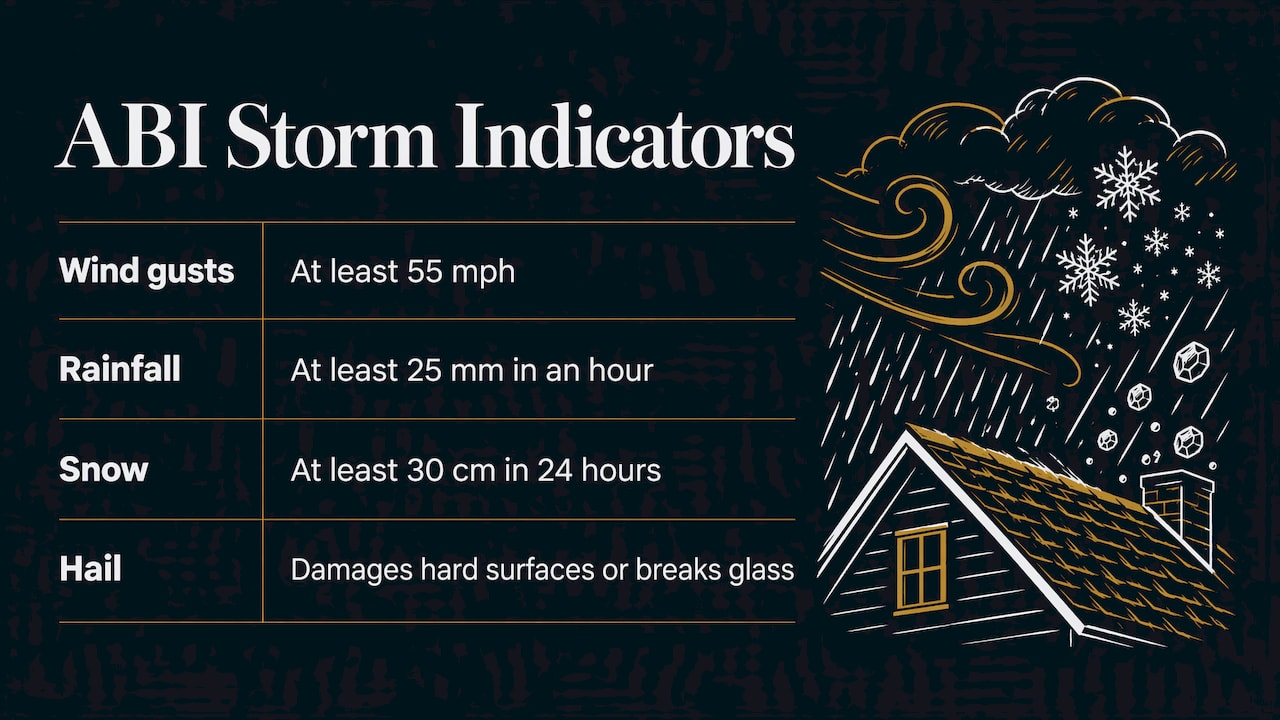
For insurance purposes, the ABI defines a storm as wind gusts of at least 55mph, rainfall of at least 25mm in an hour, snow at least 30cm deep in 24 hours, or hail heavy enough to damage hard surfaces or break glass. Insurers check Met Office data and local weather records. Where readings for your exact location are missing or inconclusive, the ABI says insurers take a flexible view of whether storm conditions prevailed and whether they were the dominant cause.
What is usually covered and what is not
Ageas states that buildings insurance typically covers storm damage to the structure, roofing, garages, fully enclosed outbuildings, garden walls and drives. It typically excludes wind under 55mph, gates and fences, and water damage from wear and tear or poor workmanship. Admiral adds that tiles already cracked before the storm are treated as wear and tear, and an excess applies to storm claims.
This is why the condition of your roof matters. Which? says claims are often turned down when a home has not been kept in good repair, especially after roof storm damage, and recommends inspecting the roof every few years and keeping proof. Flat felt roofs typically need maintenance or renewal every 10 to 15 years, depending on materials.
Flats, leaseholds and rented homes
Who you call depends on who holds the policy:
- Freeholders arrange their own buildings insurance.
- Leaseholders should notify the freeholder or management company straight away, with photos.
- Tenants should tell the landlord or letting agent. Admiral’s landlord guidance says the landlord is generally responsible for storm repairs, and the tenant’s main duty is to report damage as soon as it is noticed. Tenants insure their own belongings through contents cover.
Commercial property managers should check who holds the buildings policy and whether the lease puts roof repairs on the landlord or the occupier before they instruct anyone.
Temporary protection, and repairing in the rain
The aim of emergency work is simple: stop more water getting in. Nationwide says that if it is safe, a plastic sheet or tarpaulin can be used over storm-damaged roofs, and that insurance may pay for emergency repairs that stop damage getting worse. The ABI advises speaking to your insurer before arranging temporary repairs, and keeping receipts for any emergency work.
Can a roof be repaired while it is raining? Emergency make-safe work can be done, such as boarding up, sheeting over openings and securing loose material, but wet surfaces and high winds make a lasting repair unreliable and dangerous. The sensible split is a temporary cover straight away, with the permanent repair once the roof is dry and the wind has dropped. Putting a tarpaulin up yourself means working at height in poor conditions, which is a job for a roofer with the right equipment, not a ladder in the garden.
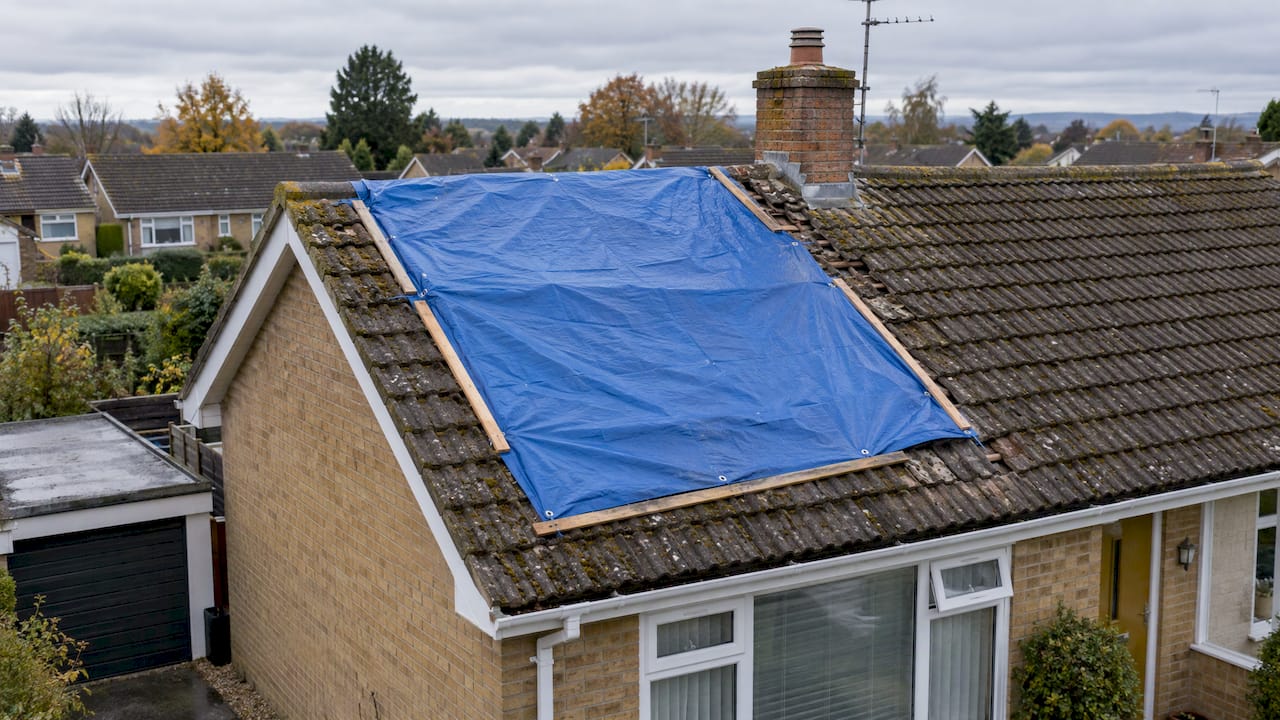
Whatever is done, tell your insurer. Which? says to report any quick fixes and keep the receipts.
What a lasting repair involves
Ageas says an emergency roofer can usually fix or replace a few tiles within one to three days, while large repairs may take several weeks, with temporary weatherproofing in the meantime. Major structural work can take up to six months. Wind damage tends to fall into a few repeat patterns:
| Damage | Typical fix | Why it matters |
|---|---|---|
| Slipped or missing tiles and slates | Replace and re-secure individual tiles | Exposes the under-felt and timbers to water |
| Lifted ridge tiles | Re-bed and repoint | Can let water in at the highest point of the roof |
| Displaced flashing | Re-fit or replace lead or metal flashing | A common source of leaks around chimneys and walls |
| Damaged flat roof covering | Patch or renew the membrane | Felt roofs often fail at seams and edges |
| Fascias, soffits and guttering pulled away | Re-fix or replace | Lets water run down walls and into the roof edge |
| Damaged chimney stack or pots | Repair or rebuild | A falling stack is a safety hazard |
We cover each of these: roof repairs for leaks and tiles, flat roof systems in EPDM, GRP and torch felt, chimney repairs and rebuilding, and fascias, soffits and guttering. If a leak traces back to flashing, our guide to a roof flashing leak shows the signs and the right repair. If the roof is beyond patching, a new roof is the lasting answer.
Ask for the report and quote to be written so your insurer can use it, with the cause of damage described clearly alongside the work needed. Insurers may arrange repairs, pay cash or use a mixture, according to Which?, and the same article says you may appoint a loss assessor to look after your interests. Before accepting a cash settlement, work out how far it will go towards putting the roof back as it was.
Storms often take other things too. If your fence came down as well, see our guide on a storm damaged fence: insurers commonly exclude fences and gates from storm cover.
How to avoid a rogue roofer after a storm
Storms bring door-knockers. The National Federation of Roofing Contractors (NFRC) warns that rogue roofers target storm-damaged homes. Citizens Advice received 8,985 roofing-related complaints between September 2025 and August 2026, and around a quarter, 2,205, were suspected scams, mostly involving doorstep sales.
Before you agree to anything:
- Never agree to work on the doorstep. Say no, and call someone you have checked.
- Match the details. NFRC advises checking that a company’s name, address and contact details match its directory listing. NFRC member firms must hold full insurances and pass site and office inspections.
- Get written quotes. The National Home Improvement Council advises up to three written quotes, except for small emergency repairs, with payment terms agreed before work starts.
- Be careful with upfront payments and avoid cash or VAT-free deals.
- Ask about the guarantee. The same guide recommends an insurance-backed guarantee as protection that survives a contractor going out of business.
If you are choosing between local firms, our guides to choosing a roofer in Chester, roof repair in Swindon and roof repair in Cardiff set out what to look for. For a plain walkthrough of the first hours, see what to do and who to call in a roofing emergency.
Our approach to storm repairs
We start from one principle: a storm repair has to satisfy two people, the homeowner who wants a dry house and the insurer who wants to see what happened. Good photographs, a clear written account of the damage and a repair that is properly finished serve both.
Our work is fully guaranteed and backed by extensive warranties, and each job is run with thorough project management so that you are not chasing several trades. We provide free written estimates, which means you know the scope before anything starts.
Because we handle roofing, chimneys, flat roofs, fascias, soffits and guttering under one roof, a storm that damages several parts of the building does not need several contractors. For commercial clients, our commercial roof repair guide explains how we approach maintenance for property managers.
Trey
Getting your roof repaired with Yellowstone
We repair and maintain roofs for homeowners and commercial clients across Wiltshire, Worcestershire, Chester, Newport, Cardiff and Swindon. If the storm has left you with a leak, loose tiles or damaged guttering, we offer free written estimates, and our work is fully guaranteed. Start with our roof repairs page, or call on the emergency repairs page if water is coming in now.

If the storm has shown that the roof needs more than repair, the same team can quote for loft conversions and insulation and home extensions. You can see finished work in our project gallery.
FAQ
How do I know if my roof has storm damage?
Look from the ground for missing or slipped tiles, displaced ridge tiles and bent flashing. Check the gutters for roof debris, and inside look for light in the loft, torn under-felt or damp patches on ceilings and around windows. Do not climb up to check.
Will my home insurance pay for storm damage to my roof?
Buildings insurance typically covers roof damage caused by a storm, but not wear and tear, poor maintenance or workmanship. You will usually pay an excess. Contact your insurer first, keep photographs and receipts, and ask what your policy says about temporary repairs.
How long does storm damage roof repair take?
A few tiles can often be replaced within one to three days, according to Ageas. Larger repairs can take several weeks, and major structural work up to six months. A temporary covering keeps the building weatherproof in the meantime.
Should I use a roofer who knocks on my door after a storm?
No. Doorstep sales account for most suspected roofing scams reported to Citizens Advice. Check a company’s name, address and insurances, get a written quote and agree payment terms before any work starts.
Sources
- NFU Mutual: Storm damage claims
- Nationwide: How to prepare your property for severe weather
- Direct Line: Storm help
- ABI: Storms
- Which?: How to claim on your home insurance after a storm
- Which?: How to make a home insurance claim
- Admiral: Storm weather hub
- Admiral: Who is responsible for storm damage to rental property?
- Ageas: Repairing common home damage after a storm
- Institution of Structural Engineers: Dealing with storm damage
- RAC: Does home insurance cover roof repairs?
- NFRC: Don’t get caught by rogue roofers
- National Home Improvement Council: Roof repairs guide