Roofers in Worcestershire: How to Choose and What to Expect

The right roofer for a Worcestershire home or commercial building is one who inspects the roof, puts a detailed quote and contract in writing, handles the paperwork the work triggers, and stands behind the result with a guarantee that outlasts the job. We are Yellowstone Roofing and Property Contractors. We work across Worcestershire, with local pages for roofers in Worcester, Bromsgrove and Pershore, and we offer free written estimates. This guide shows what to look for, whichever roofer you hire.
TL;DR
- Repair suits damage that is small, has a clear cause and leaves the surrounding roof sound. Replacement is the better answer when leaks keep returning or the covering is failing in several places.
- Insist on a written quote and a written contract that name the scope, materials, price, payment stages and guarantees. Never accept a verbal quote.
- A contractor’s own guarantee is only as good as the contractor’s business. An independent insurance-backed guarantee covers the work if the firm stops trading.
- Re-roofing often needs no planning permission, but building regulations can apply. Your roofer should deal with this before work starts.
- For an active leak, a bulging ceiling or storm damage, call a roofer straight away and keep people away from the area.
Table of Contents
- What roofing work Worcestershire properties usually need
- Urgent leaks and storm damage
- How to check a roofer before you sign
- What a written quote and contract should cover
- Guarantees: what they cover and for how long
- Planning permission and building regulations
- Extensions, lofts and the roof above them
- Before work starts and at handover
- Our view as roofers
- Talk to Yellowstone about your roof
- FAQ
- Sources
What roofing work Worcestershire properties usually need
Most enquiries fall into four groups: a repair after a leak or storm, a full replacement of an ageing roof, planned maintenance for a commercial building, and roof work that comes with an extension or loft conversion. Knowing which one you have makes every quote easier to read.
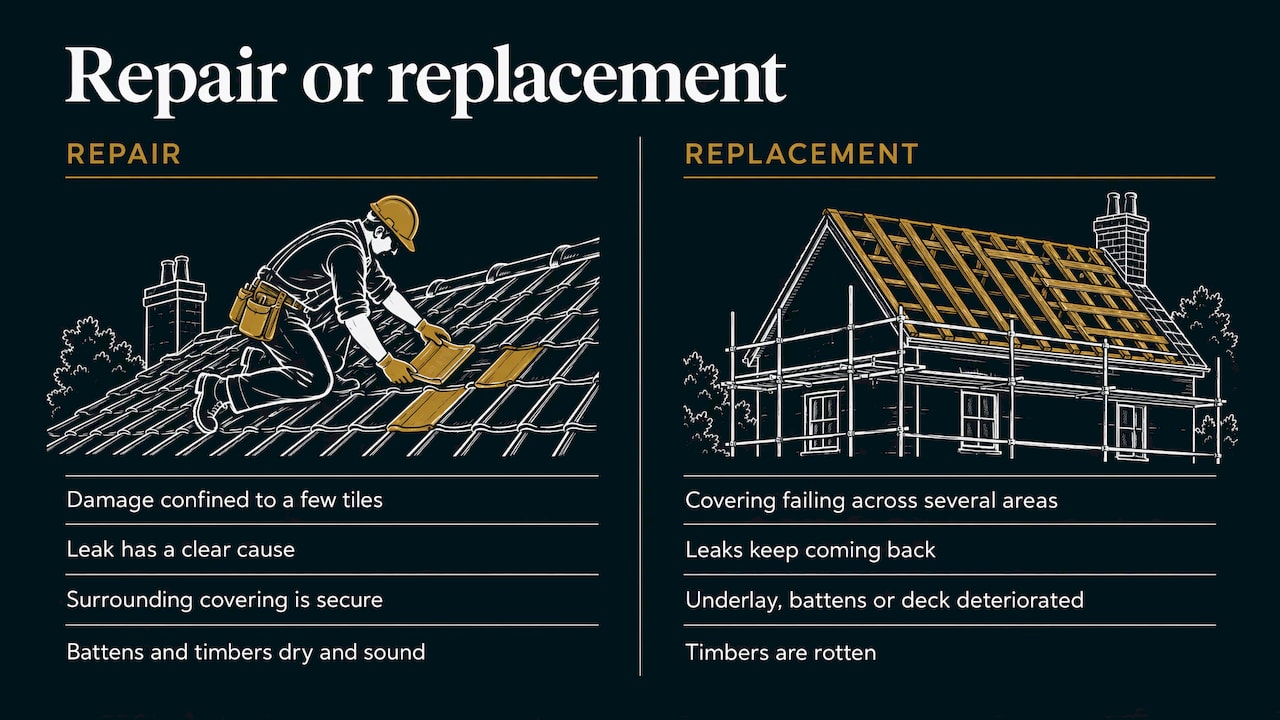
Repair or replacement? The Federation of Master Builders (FMB) says repair is appropriate when damage is confined to a few tiles, slates, flashings or membrane areas, the leak has a clear cause, the surrounding covering is secure, the battens and timbers are dry and sound, and earlier repairs have not repeatedly failed. Replacement is indicated when leaks keep coming back, the covering is failing across several areas, the underlay, battens or deck have deteriorated, timbers are rotten, or the covering has reached the end of its life.
The same guide notes that a loft conversion or extension can make wider roof work more practical, because the roof is being opened up anyway.
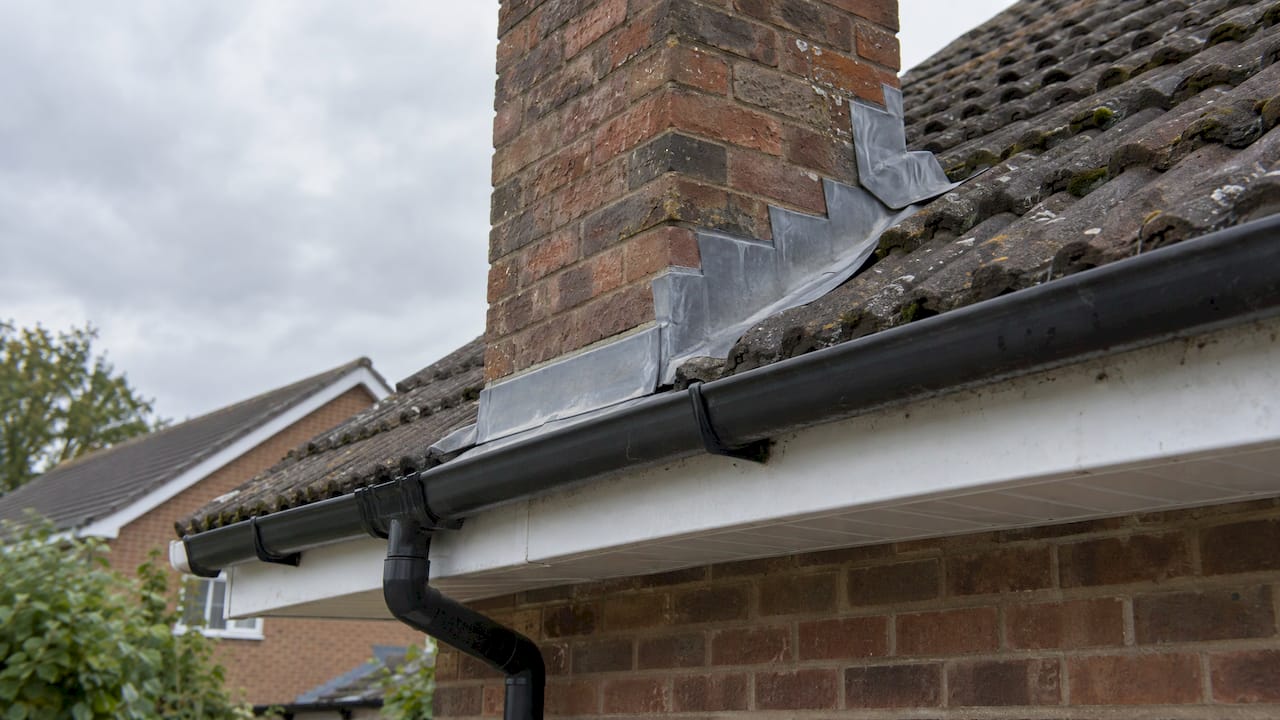
Beyond the main covering. Roofs fail at the edges as often as in the middle. Chimney stacks, flashings, fascias, soffits and gutters all let water in when neglected. Flat roofs on extensions, garages and commercial units need their own systems. We cover new roofs, flat roofs (including EPDM, GRP and torch felt), chimney repairs and rebuilding and fascias, soffits and guttering, so one contractor can look at the whole roofline rather than one fault at a time.
Commercial buildings. For property managers, the question is usually maintenance rather than crisis: regular inspection, clearing of gutters and outlets, and small repairs before they become interior damage. A single contractor who knows the building, and who can take on repairs, flat roof systems and guttering, keeps the history of the roof in one place.
Urgent leaks and storm damage
Some situations should not wait for a convenient appointment. The FMB advises arranging prompt professional help if water is getting in near electrical fittings, a ceiling is bulging, the roofline has shifted or sagged, materials could fall, a storm has left part of the roof open, or water is reaching several rooms or structural timbers.
Until the roofer arrives:
- Keep people away from the affected area.
- Do not touch wet electrical fittings. If water is near them, ask a qualified electrician to check the circuit.
- Move furniture and valuables out of the way and catch drips, but do not go onto the roof yourself.
- Photograph the damage for your insurer.
- Have a roofer make the area temporarily weatherproof first. The permanent repair can be agreed once the roof is dry and the cause is clear.
We set out the steps in more detail in our guide to emergency roof repair and our guide to residential roof repair.
How to check a roofer before you sign
Worcestershire County Council’s Trading Standards team gives a clear checklist for finding a reputable trader:
- Ask family, friends and neighbours who they have used.
- Get a detailed written quote showing the trader’s name, address and contact details. Never accept a verbal quote.
- Get a written contract that sets out the terms.
- Ask for references, and contact them.
- Check whether the trader belongs to a relevant trade association.
The council also warns that some websites listing traders simply advertise them, rather than vetting them, so check what a directory actually checks and what sanctions it has for complaints.
The National Federation of Roofing Contractors (NFRC) adds that you should ask each contractor for material advice, not simply the cheapest price, and ask for a guarantee on new or refurbishment work. Cheap quotes often leave out scaffolding, waste removal or the replacement of battens and underlay, which is why a like-for-like comparison matters more than the bottom line.
Our own approach starts with a free written estimate, and our work is fully guaranteed. Our local reviews are on our Google listing, where we are rated 5 stars from 39 reviews.
What a written quote and contract should cover
A good quote lets you compare two contractors without guessing. Using the FMB’s advice, confirm these in writing:
| Item | What to check |
|---|---|
| Scope | Exactly which slopes, flat sections, chimneys and edge details are included |
| Materials | Tile, slate or membrane type and the underlay and battens |
| Price and VAT | The total, and whether VAT is included |
| Payment stages | When each payment falls due, tied to progress |
| Access and scaffolding | Who arranges it, and where materials are stored |
| Weather protection | How the open roof is protected overnight |
| Hidden defects | How rotten timber found after stripping will be photographed, priced and approved |
| Approvals | Who handles any building regulations notification |
| Handover | Certificates, warranties and workmanship guarantees |
The FMB guide also recommends giving every contractor the same information so the quotes are comparable, and allowing for defects that only become visible once the old covering is off.
On money, the NFRC says estimates for refurbishment can change once the main covering is removed and the sub-structure is exposed, and payment terms should be agreed before work begins. It cautions against large upfront payments and against cash or VAT-free deals, which are hard to trace if something goes wrong.
Guarantees: what they cover and for how long
Contractors typically guarantee their work against defects in workmanship or materials for between one and ten years. That promise is only as strong as the firm giving it. If a contractor ceases trading, a written guarantee alone can become worthless.
This is where an insurance-backed guarantee (IBG) comes in. The Confederation of Roofing Contractors explains that an IBG runs alongside the installer’s own guarantee, so the work stays covered for the rest of that guarantee period if the company goes into liquidation, receivership or administration. It also notes that IBGs are chargeable and not required by law, that they cannot cover repairs, paints or resins, and that works must be paid for in full before the IBG is issued.
The practical lesson is to settle the guarantee question before work starts, not at handover. Ask in writing what guarantee comes with the job, how long it lasts, and what it covers. Our warranties and guaranteed work are central to how we work, and your estimate is the place to confirm the terms for your project.
Planning permission and building regulations
Three separate systems can apply to a roof: planning permission, building regulations approval and, for listed buildings, listed building consent. The government’s Manual to the Building Regulations makes clear that approval under one does not replace the others.
Planning. According to the FMB, re-roofing a house in England without materially changing its appearance usually needs no planning permission. Changes to shape or height, some rooflights and dormers need further checks. Flats do not have the same permitted development rights as houses. For extensions, householder applications in Worcestershire go to your district council, whether that is Bromsgrove, Malvern Hills, Redditch, Worcester City, Wychavon or Wyre Forest. The NFRC reminds owners that the property owner is responsible for any planning permission required.
Building regulations. Minor repairs may not need building control, but extensive re-roofing or structural alteration can. The NFRC states that where 50% or more of a roof area is being refurbished, you must either use a contractor registered with its Competent Person Scheme or contact Local Authority Building Control before work starts. The Building Regulations 2010 exempt replacement roof coverings from the notice and full-plans requirement when carried out by a person registered with NAPIT or the NFRC.
There is an energy angle too. Under Regulation 23, if more than half of a roof is renovated or replaced, the whole element must meet current energy requirements where technically and economically feasible. That includes replacing a membrane or adding a new layer such as insulation. This is why a re-roof is the natural moment to talk about insulation, and why our loft conversion and insulation work is often discussed alongside roofing.
If your project involves structural change, such as a loft conversion or an extension roof, it helps to understand the structural side of the regulations. This explainer on Building Regulations Part A structure covers what that part of the rules is about.
Extensions, lofts and the roof above them
An extension is a roofing project as much as a building one. The roof decides how the new space connects to the old, how water is carried away and how well the room holds heat. A flat roof over a single-storey extension needs a proper system, such as EPDM, GRP or torch felt, installed to suit the structure beneath it.
We build home extensions, loft conversions and conservatories for residential and commercial properties, so the roof, the structure and the finishing sit under one project plan rather than being split between trades. Fascias, guttering, driveways and fencing can be included in the same job.
Before work starts and at handover
A little preparation avoids most disputes:
- Agree access, scaffolding, storage and the emergency contact in writing.
- Clear the loft or top-floor rooms of anything that dust or debris could damage.
- Tell neighbours about scaffolding and working hours.
- Agree how any hidden defects will be photographed and priced.
At handover, collect every certificate, warranty and guarantee in the contract, and walk the finished roof and gutters with the contractor. After the work, a post-renovation cleaning checklist helps you deal with dust and debris inside the property.
Our view as roofers
Most roofing problems we are asked about start small and get expensive because nobody looked at the whole roof. A slipped tile is cheap. The damp batten behind it is not.
That is why we think the best roofing job is a managed one: a clear written estimate, one team that understands the roof, chimney, flat sections and guttering together, and work that is fully guaranteed. Our clients, homeowners and commercial property managers alike, want the roof dealt with without having to chase it.
Our aim on every job is skilled craftsmanship and thorough project management, from the first inspection to the final walk-round, so you get a roof that lasts and a handover with the paperwork in your hands.
Trey
Talk to Yellowstone about your roof
If you are in Worcester, Bromsgrove, Pershore or elsewhere in Worcestershire, we can look at your roof and give you a free written estimate for roofing, repairs, chimneys, flat roofs, guttering, extensions or lofts, for homes and commercial properties. Start with our roofers in Worcester page, or contact us through our website.

For leaks and storm damage, see our roof repairs page.
FAQ
Do I need planning permission to replace my roof?
Often not. In England, re-roofing a house without materially changing its external appearance usually does not need planning permission, according to the FMB. Changes to height or shape, some rooflights and dormers, flats and listed buildings need further checks, and building regulations may still apply.
Should I repair or replace my roof?
Repair fits a small, clearly caused area of damage on an otherwise sound roof. Replacement is the better route when leaks keep returning, the covering is failing in several places, or the timbers beneath have deteriorated. A written estimate after an inspection will show which applies.
What should a roofing quote include?
The scope, materials, total price, whether VAT is included, payment stages, access and scaffolding arrangements, how hidden defects will be handled, and the guarantees you will receive. Always get it in writing.
What should I do if my roof leaks during a storm?
Keep people away from the affected area and do not touch wet electrical fittings. Photograph the damage, then call a roofer to make the roof temporarily weatherproof before agreeing a permanent repair.
Sources
- The ultimate guide to roofing (FMB)
- Finding a reputable trader (Worcestershire County Council)
- Advice on choosing a contractor (NFRC)
- Insurance Backed Guarantees for customers (CORC)
- QANW homeowner guide
- The Building Regulations 2010, Schedule 3
- Manual to the Building Regulations
- Make a planning application (Worcestershire County Council)